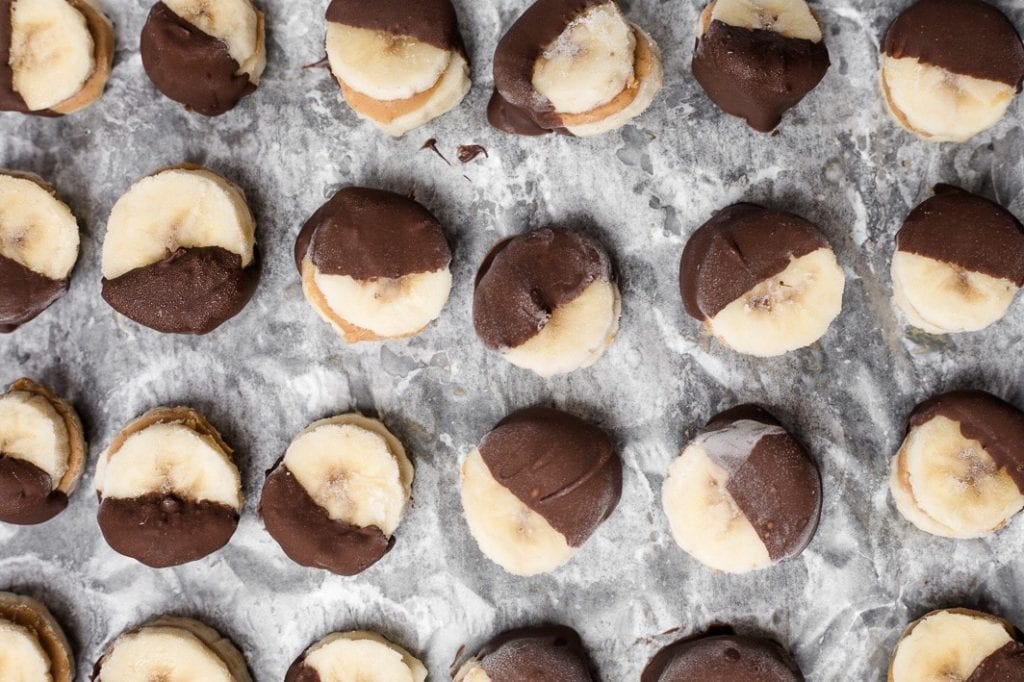
Directions to Make these Delicious Cannabis Bananas
Prep time: 5 minutes Cook time: 10 minutes Ready in: 1-2 hours ** Extra time needed for decarboxylation and infusion. See our infusion guide*
Prep a small tray with parchment paper, making sure it fits in your freezer.
Set up your double boiler: place a large glass (oven safe) bowl over a pot of simmering water, about 1-2” deep, making sure the bowl and water do not touch. Combine chocolate chips and infused oil in the bowl and melt using double boiler over very, very low heat (you don’t want to destroy the cannabinoids).
In the meantime, slice ripe banana into 1” chunks. Set aside.
Once the chocolate and infused oil are melted and incorporated, remove from heat. Add banana chunks to the bowl of chocolate and stir carefully with a rubber spatula, coating well. Place each piece on your parchment-lined tray. While chocolate is still warm, you can add optional toppings like coconut flakes, chopped toasted nuts, hemp hearts, or cocoa nibs sprinkling them into the melted chocolate to make variations of these cannabis bananas. You may need to press the toppings lightly into the chocolate so they adhere well.
Place the tray in the freezer so each piece of canna banana solidifies. Once frozen, you can remove from parchment and store in a freezer bag to enjoy any time.
Gluten free, Dairy free
How was Our Marijuana Banana Recipe?
Did you give this marijuana banana recipe a shot? If so, let us know hoe it turned out in the comments!
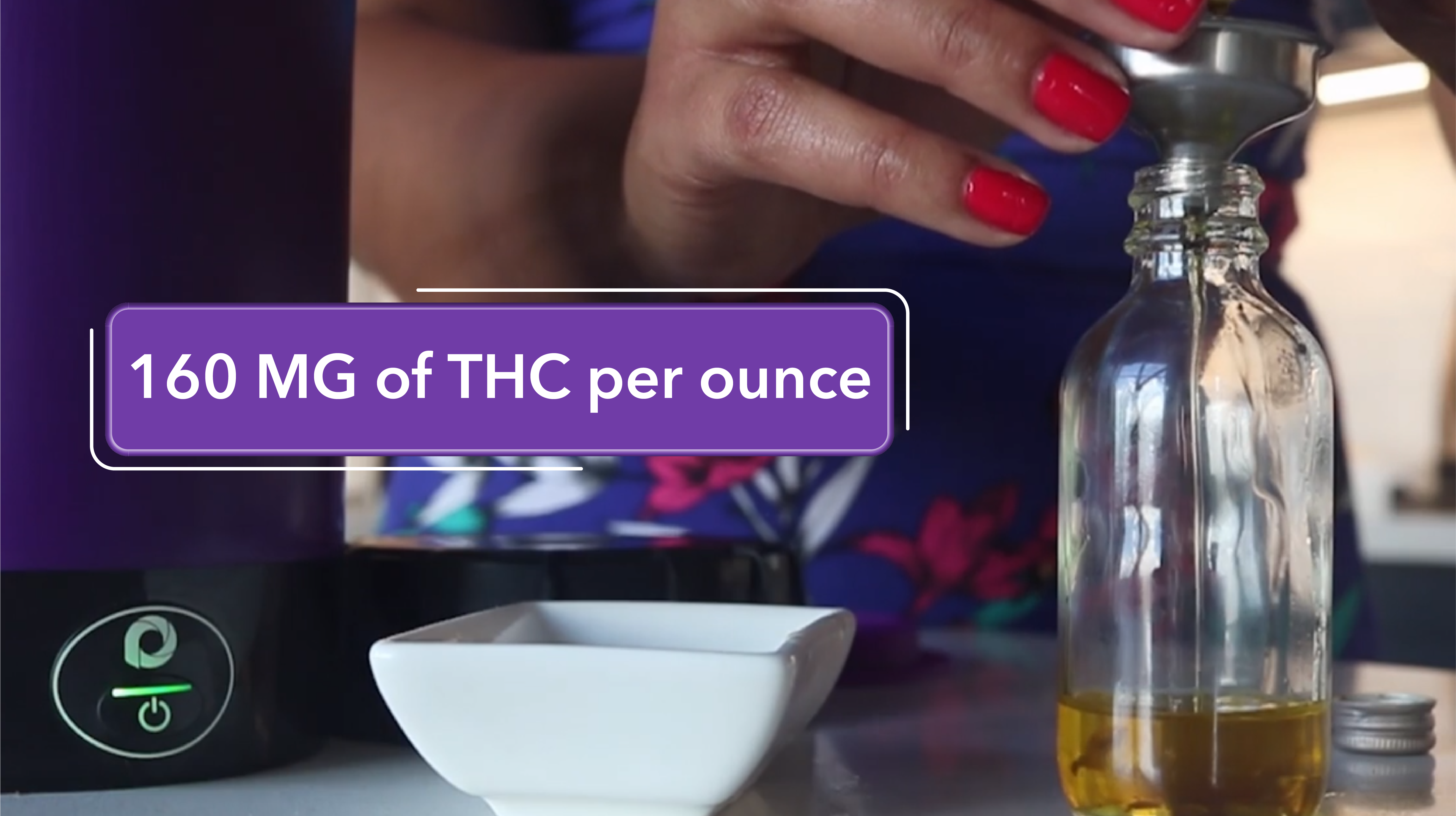
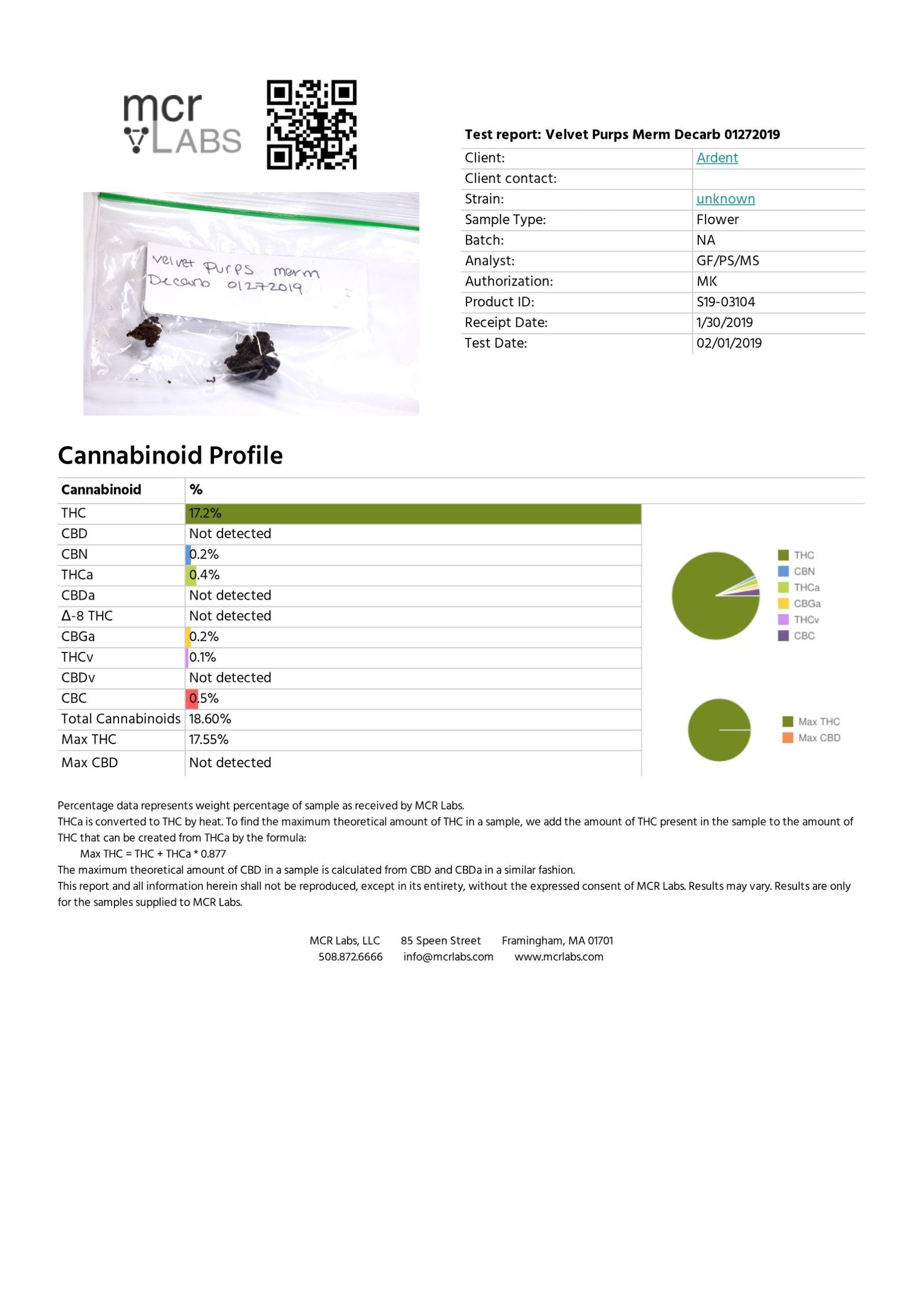
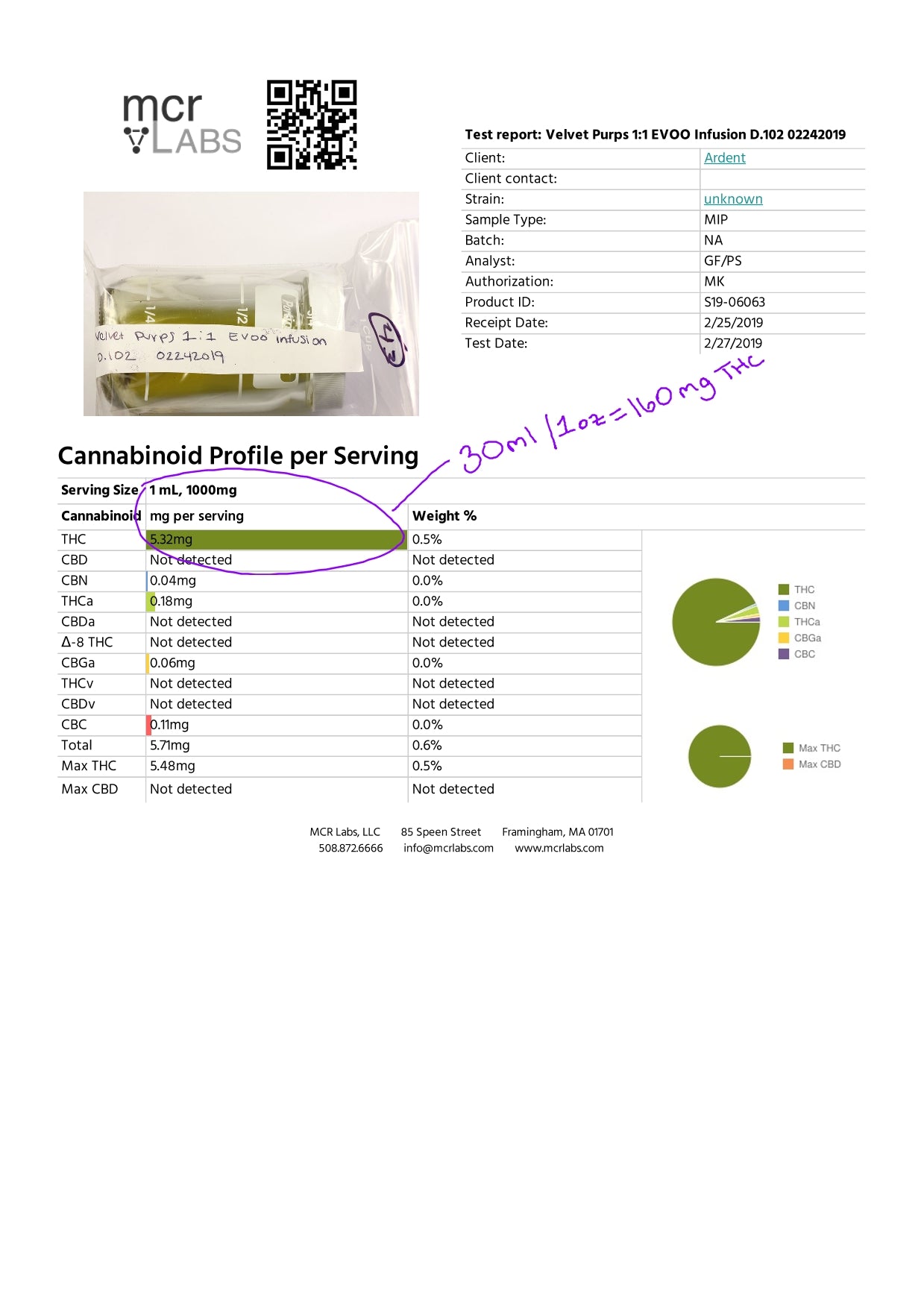
We took a gram of cannabis and made a potent Extra Virgin Olive Oil that can be used alone or as the base for so many different therapeutic, wellness, or entertainment purposes. Decarbed, this beautiful purple strain is 17.2% THC, which is 172 mg of THC in each gram. Infusing one gram of decarbed flower into EVOO gave us 160 mg into the ounce of oil!. Starting flower testing below on the left, finished oil on the right.
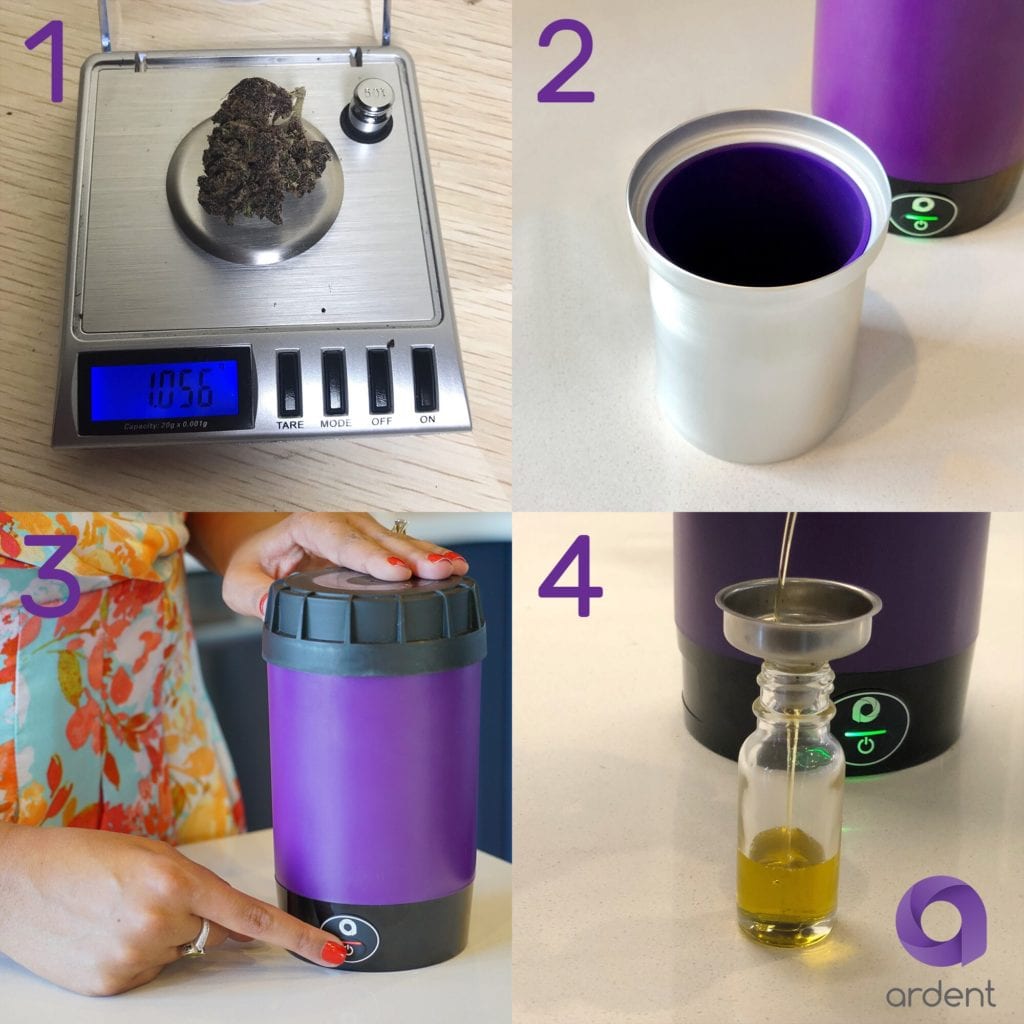
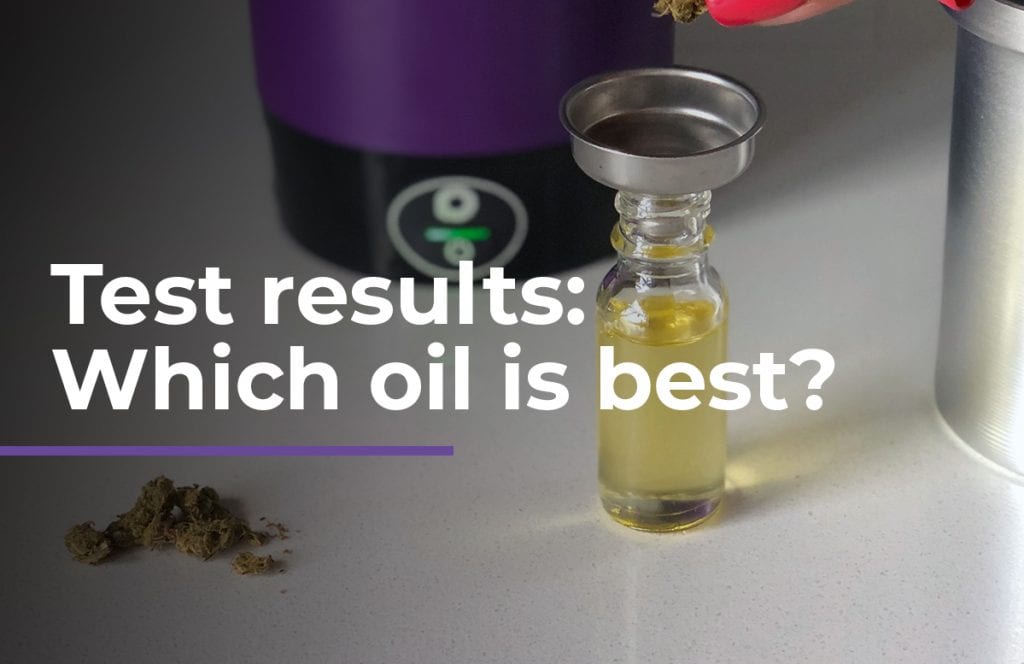
How we infuse: We took 1 gram of flower we decarbed in the Nova Lift, broke it up a little bit (no grinding needed) and mixed it with 1 ounce of our EVOO in the silicone sleeve . When you place the sleeve into the Nova Lift and press the button, the THC (or CBD, if you are using CBD flower) infuses right into the oil. A quick strain when it comes out, and your oil is ready to use! Easy as pie — which it also tastes delicious in btw…
The 1 gram of cannabis we started with had 172 mg of THC, and our final ounce of oil had 160 mg of THC. That’s an over 90% infusion rate with 160mg active THC using just one gram of cannabis. How amazing is that?
Ways you can use your oil: Literally endless, and we know you want to know them all. Check out this simple and delicious recipe for chocolate cannabis bananas.
Now that you’ve learned how to decarb weed, you’re ready to tackle cannabis oil infusions. Learning the information is the first step in your journey of learning how to infuse cannabinoids (or just your new favorite method). There are many ways to combine your plant material with fats like oil, butter, and ghee, to make your infused treats even tastier and more bioavailable than ever before.
Once your medical marijuana is decarboxylated, fats and oils act like insulators to your cannabis flower, and can typically undergo a bit more heating before fully binding with the cannabinoids and terpenes in your plant material. This guide will help you go from stovetop to the final product in no time.
TABLE OF CONTENTS
3 Ways to Make Cannabis Infused Oil
Nova Decarboxylator
Slow Cooker Method
Double Boiler Method
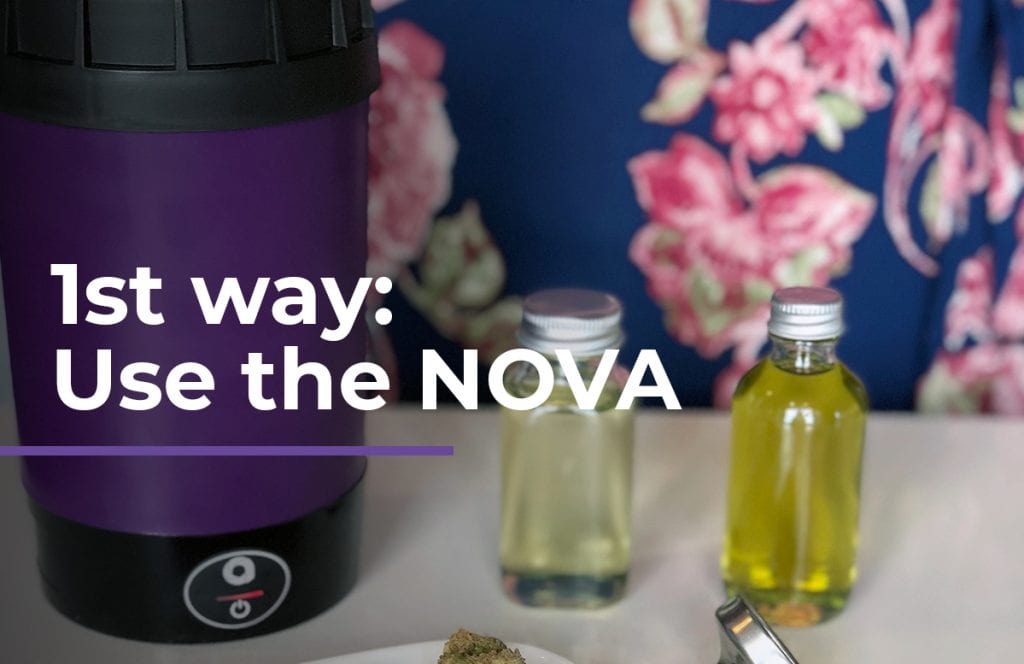
1. Nova Decarboxylator
That’s right! You can now infuse cannabis right inside the NOVA. Watch our how-to video here.
Storing your cannabis flower in a cool, dark place before or after decarb is the first step to maximum potency. When exposed to excessive heat over long periods of time, degradation of plant material begins to occur, which may result in a weaker end product.
Decarboxylate your cannabis. Decarbing in the Nova results in a full decarb, every time. Skill level required: beginner to pro.
Put the jar back into the decarboxylator for a second cycle. The second cycle will pull the THC or CBD from the plant and infuse it into the oil.
When the process is complete, strain the plant material from the oil.
The infused butter or oil can then be used to make any cannabis product, including THC and CBD oils and tinctures, gummies, brownies, and other edibles or giftable cooking oils.
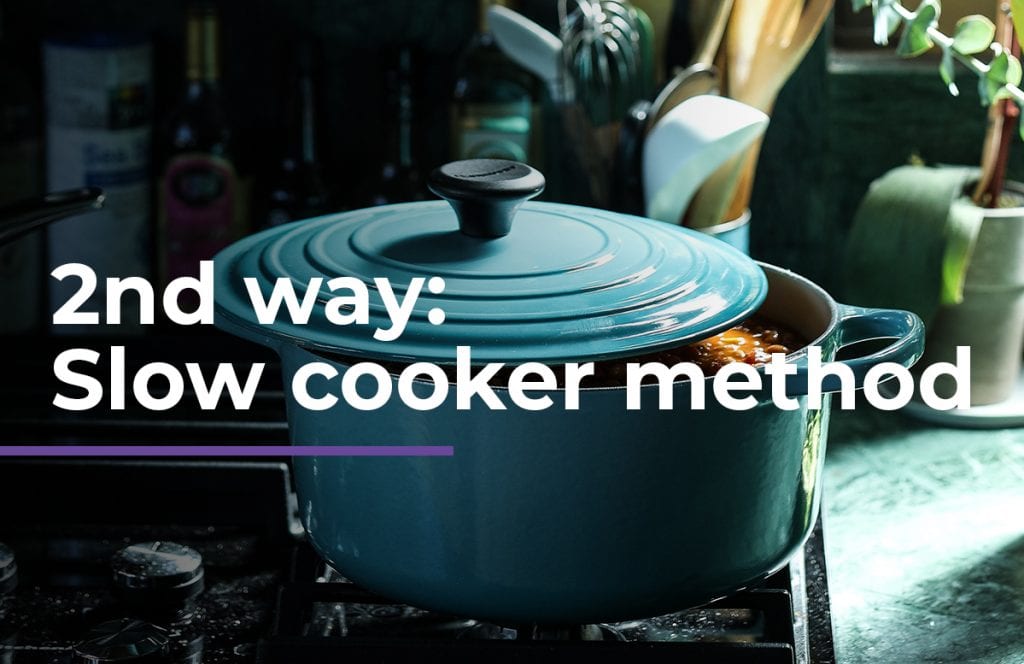
2. Slow Cooker Method
Many folks opt for the slow cooker or crockpot method because it can help infuse your medical cannabis over low heat for over an extended period of time. This method is also called the water bath method.
Decarb the Cannabis Decarbing in the crockpot results in, at most, a 70% decarb and will vary from batch to batch. Skill level required: intermediate to pro. To decarb in the crockpot or slow cooker, you must place your plant material in a water bath, preventing the temperature from going over water’s boiling point of 212 degrees Fahrenheit. You can use a mason jar to shelter the cannabis buds from the water. The crockpot method is great for maintaining temperature stability but fails to fully and effectively activate all available cannabinoids due to its inability to go beyond 212 degrees leaving it unable to achieve a full decarb.
Select your Oil When using this method, a thick fat like butter, olive oil, or coconut oil usually makes the most sense for your infusion.
Heat Add your decarboxylated cannabis, butter, and water to the crockpot mixture, and allow it to sit over low heat (adding more water, if necessary) and infuse for 2 hours.
Strain Strain out your plant material, using a cheesecloth, coffee filter, or the Ardent Frainer (our funnel/strainer hybrid,) and discard.
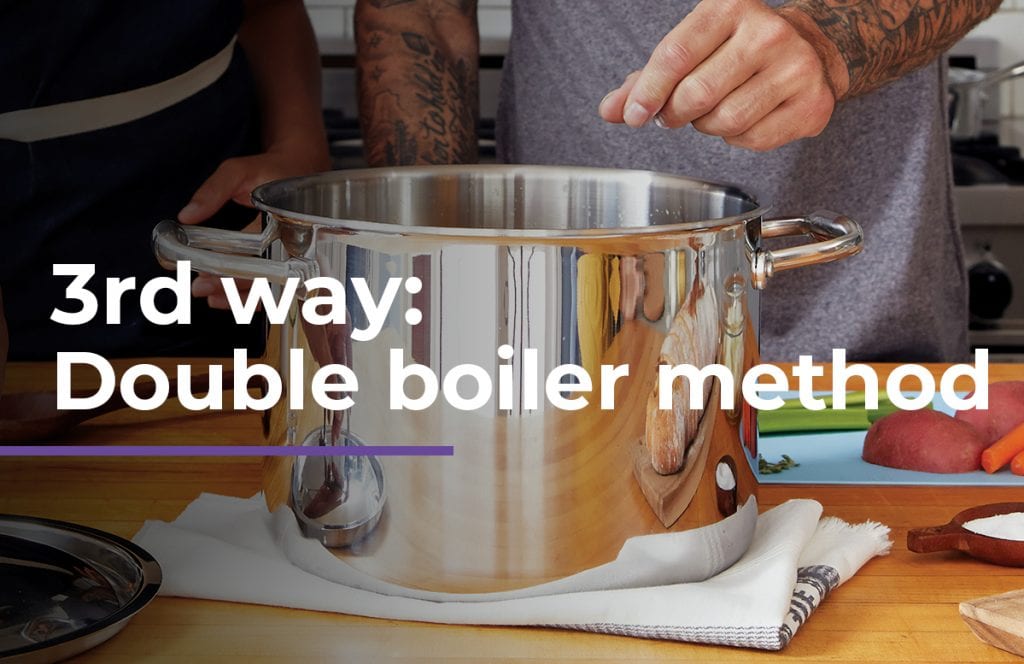
3. Double Boiler Method
Double boilers are useful tools for melting chocolate and working with other sensitive materials, like butter and milk, that can easily scorch. Many patients also utilize double boilers to create concentrates but we will focus on butters and oils today.
Like the crockpot method, the double boiler method helps maintain a layer of protection from direct heat; however, you’re limited to the temperature of boiling water, which can only reach 212 degrees F. The double boiler method also comes with intrusive aromas and fluctuating temperatures due to exposure to direct air throughout the infusion process, impacting the strength and quality of your final product.
Decarb cannabis using a slow cooker, stove, or for maximum efficiency use the Nova decarboxylator
Combine oil and plant material in the double boiler
Pour the oil or butter of your choice in the double boiler with your plant material
Place Mixture Over Medium Heat Allow the oil and cannabis mixture to infuse over medium heat for 90 minutes, occasionally stirring.
Strain and store
Remove double boiler from heat. Using a cheesecloth, strainer, or the Ardent Frainer, our funner/strainer hybrid, separate your plant material from your infused oil and dispose of the used material. Store your infused oil in an airtight container like a tincture bottle, and enjoy it as is, or as an ingredient in the recipes of your choice.
But wait…there’s more! Test results show how to infuse cannabinoids
Much like the decarb process, there’s a lot of mystery surrounding cannabis infusion. This is mainly due to the lack of data regarding the infusion process – there’s little to no real testing to show the maximum amount of THC you can get into butter or oil infusions.
We set out to change that by bringing in MCR Labs to test a number of infusion samples extracted using the Nova. We were excited with the results.
Will infusing decarbed herb damage the THC?
When you add the decarbed flower into the fatty oil, the oil encapsulates the flower, acting as an insulator.
That’s why it’s necessary to decarb BEFORE you infuse.
The oil acting as an insulator means that you won’t get a fully activated product if you don’t decarb before the infusion process.
Our testing below shows the infusion of flower that was NOT decarboxylated prior to infusion. The flower was mixed with oil and placed in the decarboxylator.
*Total Potential THC = THCA x .87 + THC. When THCA converts to THC the acid molecule (carboxyl group) is released, reducing the total molecule weight by 13%. Thus, you can only get the full potential THC with precision decarboxylation.
While there was good infusion into the oil (80%), you can see the vast majority of the cannabinoids are still in the acid THCA form (almost 100mg). This means that when using this oil, instead of getting the effects of the expected 130mg dose of THC, you would only get 47mg.
What’s the best oil to infuse THC or CBD?
We tested several types of oils to figure out which type of oil produced the highest THC levels after infusion.
Details of the test:
Starting flower for all of the infusions was 20% THC after precision decarb in the Nova. That means in each gram of starting material, there was 200mg of THC. See our guide on how to measure THC for more details on dosing after decarboxylation.
In the table directly below, 2 grams of decarbed flower totaling 400mg of THC was placed inside a glass container with 1 ounce of oil and infused for 1 cycle. The testing results below show how much of the 400mg were pulled into the ounce of oil during the infusion.
Choosing a good oil for the infusion isn’t too difficult. Every oil we tested had an infusion rate of 80% or higher, and some over 90%. Keep scrolling to see infusion percentages of more oils and information on increasing and decreasing the potency.
Check them out:
Decarbed Flower 20% THC ~ 200 milligrams per gram of flower (200mg/g) View Results
Changing the potency is a matter of adding additional cannabis. You can use as little as a half a gram of flower. For those who need a higher dose, just increase the amount of cannabis.
Flower to oil ratio is another question we get all the time. We were able to get up to 700mg in an ounce of oil out of a total of 800mg (4gm) of flower material.
That was the highest saturation point for this particular strain of flower in one ounce of oil (though you could get higher using more potent flower, concentrate or kief).
TYPE OF OIL
AMOUNT OF MATERIAL PLACED INTO 1 OZ OF OIL
TOTAL MG EXTRACTED INTO 1 OZ OIL
INFUSION %
Butter
0.5 – 100mg
93mg
93%
View Results
Avocado
0.5 – 100mg
92mg
92%
View Results
MCT
0.5 – 100mg
91mg
91%
View Results
Grapeseed
1g – 200mg
163mg
81%
View Results
MCT
4g – 800mg
707mg
87%
View Results
Coconut
4g – 800mg
670mg
82%
View Results
Walnut
4g – 800mg
679mg
83%
View Results
EVOO
4g – 800mg
675mg
83%
View Results
*Dosing with edibles should start low (5mg) and then titrate up 5mg per 2-3 hours after your last dose to test and reach the appropriate dose. Most legal states limit dispensary doses to 10mg per dose, with 10 servings (100mg) per package. Patients using cannabis for severe pain relief may need to use more than 100mg per day.
Can you increase potency with kief or concentrates?
Follow the same procedure: decarb the kief or concentrate first, then mix with your butter, oil, or ghee to infuse.
However, you can choose whether you want to strain the kief out, or leave it inside. If you plan to strain, put the material through an entire infusion cycle to make sure the maximum amount infuses into the oil. Then, using a cheesecloth, coffee filter, or the Ardent Frainer (our funnel/strainer combo) separate your plant material from the oil. Otherwise, simply stir. With concentrates, it’s really more of a mixing process than an infusion process (concentrates will blend with the oil; there is no straining necessary or even possible).
After decarbing the concentrates, you can mix it with the oil and put it back in the decarboxylator for another 30 minutes, to allow the contents to heat and blend.
Cannabis Infused Oil Summary
The Ardent decarboxyaltors are the most easy, mess-free, and effective way to decarboxylate and infuse cannabis into butters and oils at home. Through our research with MCR Labs, we’re able to put older methods and new technology to the test, providing consumers with scientifically-backed proof for all of their holistic kitchen experiments. Happy infusing!
Perfect Decarb and Infusion in One
Activate and Infuse your THC with the Nova Lift Home Decarboxylator.
Direct sublingual application is firmly rooted in science and is traditionally one of the most effective uses of medical marijuana.
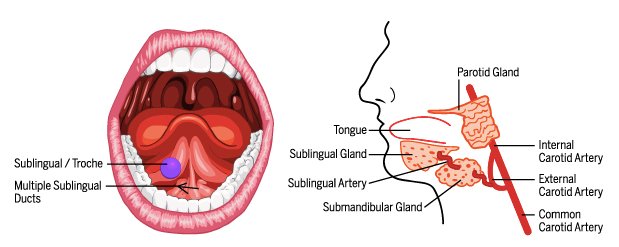
Direct sublingual application allows the cannabinoids to quickly enter the bloodstream through the vessel-rich tissues within the sublingual cavity which can be achieved by placing decarboxylated cannabis under the tongue.
Sublingual THC dosing is a fast, accurate ingestion without the hazards of smoking.
TABLE OF CONTENTS
Sublingual THC Dosing Starts with 100% Decarboxylation
The first step to sublingual THC dosing is to decarboxylate the cannabis plant to active the cannabinoids present.
This discovery is significant, as sublingual use of decarboxylated cannabis provides accurate delivery of THC and other useful cannabinoids, such as CBD, without the drawbacks of smoking or cooking cannabis.
The onset of pharmacological effects is rapid, and the duration often exceeds other forms of ingestion. With sublingual marijuana use, the delivery of both THC and other useful cannabinoids is significantly improved.
Sublingual delivery of cannabis is a superior mode of administration considering the hazards of smoking cannabis, and the pharmacokinetic limitations of ingesting cannabis.
THCA in its natural state, is the biosynthesized precursor to activate THC in marijuana. The carboxyl group tetrahydrocannabinolic acid (THCA) in cannabis must be removed by heat. Once the cannabis is “decarboxylated” you have activated the THC.
When smoked the THC is delivered rapidly through the lungs. On the other hand, when THC is digested in the gastrointestinal tract, the effects are felt at a much slower rate. Unfortunately, the conventional methods of preparing and ingesting cannabis involve imprecise and incomplete decarboxylation which lead to an inferior medicine and lower THC potency in your final product.
Benefits of Putting THC Oil Under the Tongue
Why use sublingual dosing?
Immediate relief – no waiting for digestive tract absorption
No negative healtheffects – better than smoking or vaporizing.
Accuracy – nothing lost in extraction so you can dose more accurately than tinctures, smoking and eating
Access and choice – pharmaceutical grade solution at home with own cannabis
Safety – safer and more reliable than edibles and extracts
Cost saving – patients use less, more cost effective solution
Discretion – less obvious
Sublingual Cannabis Use is Superior to Smoking
Sublingual cannabis delivery provides rapid effects similar to smoking without exposing the lungs to heat, tar, or other unwanted collateral effects. Including the unpleasant smell of smoke, dry mouth, and throat irritation caused by smoking. Not to mention the side effects on an individual’s lungs after years of smoking cannabis.
When, ignited, nearly 50% of the cannabinoids present in cannabis literally “go up in smoke” that is not actually inhaled by the user. Putting THC oil under the tongue is more efficient, ultimately, requiring smaller amounts of cannabis for the same effect, as more of the active cannabinoids are absorbed into the bloodstream.
Sublingual administration allows the user to avoid the heat, tar, potential kickback, and even the carbon dioxide created by the most popular smoking alternative such as flower vaporizers. Today vape pens are the most popular smoking alternative to flower, but the health effects are just starting to be understood. Most importantly, sublingual administration allows for accurate dosing of cannabinoids, ensuring that patients and physicians retain control.
Sublingual Marijuana Use is Better than Ingestion
Sublingual delivery is superior to ingestion of cannabis. While ingesting cannabis can provide long lasting therapeutic effects, this method presents numerous drawbacks as well.
Onset from ingestion is significantly delayed – generally an average of over an hour after administration. This delay also makes it difficult to titrate doses as compared to sublingual administration. When ingesting cannabis the onset of pharmacological effect typically takes between 30 minutes and 120 minutes.
Effects from Sublingual Dosing is Fast
Conversely, the sublingual dosage form induces an effect in a subject within about 30 to 120 seconds of the sublingual dosage. Therefore, ingestion is an inefficient form of administration due to the lag in time of the effects.
Decreased bioavailability in the digestive tract results in absorption of only 10% to 20% of cannabinoids. On the other hand, during the oral ingestion the cannabis must “first pass metabolism,” whereby the cannabinoids are first processed by the liver before entering the bloodstream.
Processing by the liver alters cannabinoids, leading to distinct therapeutic effects from those experienced with other forms of administration. While ingestion of cannabis may be unsatisfactory on its own, it can be an excellent complement to sublingual administration. In conjunction with sublingual delivery, ingestion can provide the user with a more therapeutic experience.
Is Sublingual Administration Right for You?
The traditional methods of preparing and ingesting cannabis have several drawbacks, which include:
Smoking cannabis creates harmful carcinogens through destructive pyrolysis of numerous plant compounds due to the heat of the flame and can also cause irritation to the lung tissue
Eating cannabis requires a significant period of time before you feel the effects, and the uptake through the gastrointestinal tract is uneven and incomplete
Also, any preparation other than smoking requires extraction of the active cannabinoids into a secondary medium, which results in loss during extraction and inconsistent end results.
Direct sublingual application (DSA) of cannabis, however, provides accurate, rapid administration with no negative health effects.
Have Questions on How to Use Sublingual THC Drops?
If you have questions on how to use weed sublingually, leave a comment and our team will get them answered for you, ASAP.
Decarb ¼ ounce of cannabis using the oven method (220 degrees fahrenheit for 40 minutes) or for best results, use a Nova decarboxylator. When your bud is decarbed, grind it into medium-sized pieces for creating cannabutter.
To make cannabutter, place ½ cup butter, the decarbed flower, and 1 tsp of lecithin granules into a glass jar with lid and cook for 2-3 hours, checking in on it regularly. Strain plant matter from finished product using cheesecloth in a fine mesh strainer.
Pour melted cannabutter into a mixing bowl and add 2 cups peanut butter, 1 ½ teaspoon vanilla, and pinch of salt. Whisk until everything is mixed well.
Using a hand mixer, add 3 ¼ cups powdered sugar approximately one cup at a time for easier mixing.
Line a baking sheet with parchment paper. Scoop up approximately 1 tablespoon of the mixture, roll into a ball, and place on the baking sheet. Repeat until all peanut butter mixture is used. Place pan into freezer for 30 minutes.
While the peanut butter balls are in the freezer, melt 1 cup chocolate chips in a microwave-safe bowl. Heat the chips in 30-second increments, stirring in between, until the chocolate is completely melted.
Remove peanut butter balls from freezer and using a toothpick or skewer stuck into the top center of peanut butter ball, dip the ball ¾ of the way into the melted chocolate. Let any excess chocolate drip off, then place the buckeye on the baking sheet. Dip each ball into the chocolate and once completed, let chocolate harden. To speed up the process, place pan into the fridge for 20-30 minutes.
Enjoy! As with all edibles, start slow until you know your tolerance level. For best results, store buckeyes in an airtight container in the fridge.
There are dozens of ways to consume cannabis. As more consumers begin to see the benefits of marijuana, people are also looking to find easier ways to make edibles, topical solutions, THC oils, and much more. Each method of consumption has its own benefits – depending on your reason for usage. It is important to understand your options as the stigma surrounding the use of marijuana has started to change around the world.
Whether for medical use or recreational purposes, consumers are constantly searching for new ways to use cannabis. Before you enjoy the massive list of ways that you can consume marijuana, let us explain the basics of marijuana and how THC works.
TABLE OF CONTENTS
What is Marijuana?
There are two subsets of the cannabis plant. The first is what we all know as marijuana which has the psychoactive effect commonly referred to as a “high”. Though marijuana it is not yet fully approved as medicine. Scientific studies on its benefits have led the FDA to approval of some chemical pills and sprays containing THC and CBD.
What is Hemp?
The second subset of the cannabis plant is called hemp, which has lower doses of THC, therefore does not have the same intoxicating effects of marijuana. Both marijuana and hemp contain cannabinoids and terpenes. The two dominant cannabinoids in both plants are: Tetrahydrocannabinol (THC) and Cannabidiol (CBD). Between the two plant types, marijuana is the one that is most sought after for its abundant THC content.
What is THC?
THC is a psychoactive cannabinoid found in both marijuana and hemp plant. In marijuana, however, it’s more abundant. THC, unlike CBD, can cause a person to get “high” when consumed. The science behind this psychoactive effect is that THC activates the body’s endocannabinoid system.
The endocannabinoid is a system of CB1 and CB2 receptors in the central nervous system and throughout the body These receptors alter the brain signaling process which influences concentration, appetite, and many more of the body’s operating systems.
THC, for example, binds onto CB1 receptors, which are consequential in that it has an effect on cognitive functioning such as attention span, the formation of memories and the coordination of movements. It also activates the reward system in the brain which in some cases can cause a surge in dopamine levels which induce an intense biological response that leads to a decrease in pain, nausea and more.
Now that you have a better understanding of marijuana and how THC works, here’s a look at some of the ways to consume cannabis.
1. Pills or Capsules
Also known as cannacaps, THC capsules have become a popular method of ingesting marijuana. THC pills contain marijuana, typically suspended in an oil. The pros of this application make it suitable for people with respiratory issues. It also delivers a accurate dose and can be used to treat multiple illnesses. The con is that the body’s digestive mechanism may interfere with its absorption into the bloodstream.
You can also make instant cannacaps by placing decarbed cannabis or concentrates right into capsules. Include a drop of coconut oil or MCT and lecithin with decarbed cannabis to help with absorption, Marijuana pills provide a safe way to consume cannabinoids.
There’s a number of benefits to using cannacaps:
Because they deliver a steady, predictable dose of THC, they’re considered safer than smoking (remember though, that the timing of the onset of effects can vary, since the cannabinoids have to make their way through the digestive system before they are absorbed into the bloodstream).
There’s no smell, no smoke and they are discreet.
They can be used to treat a variety of ailments when combined with other ingredients (i.e. melatonin for sleep or B12 vitamins).
The THC has a long duration of effect.
Additionally, for those who use other medicine in capsule/pill form, such as prescription medication, capsules are easy to include in their existing process.
2. Dabbing
Dabs are concentrated forms of cannabis made by extracting THC and other cannabinoids from the plant, often using a solvent like butane, ethanol, or carbon dioxide. The end result is a sticky oil sometimes called wax, shatter, budder, butane hash oil (BHO), or RSO. There are also more healthy, solventless concentrates that are made without using any chemicals or solvents. Rosin, ice water hash, and kief are all solventless concentrates.
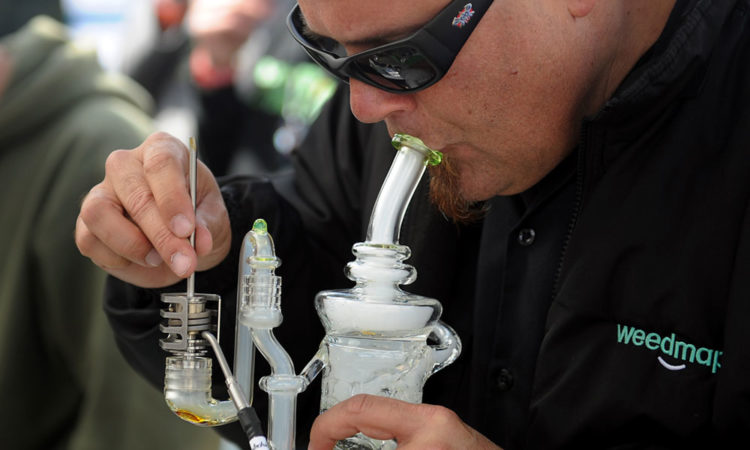
Dabbing can be a tricky process requiring specific equipment such as a dab rig, torch or e-nail. In dabbing, take a rice grain size of wax concentrate and place it on a rig or vaporizer, then heat it to release the ingredients while the end user inhales the smoke. Dabs have also become very popular with new cannabis users through the introduction of an almost endless variety of concentrate pens and cannabis extract cartridges.
When done correctly, dabbing can deliver a clean, high dose and pure product that is easier on your lungs than other methods of consumption. You can decarboxylate concentrates and then use the decarbed concentrate to dab on super low temperatures for even more yield with a smooth inhale.
You can also use activated concentrates to make any cannabis product, like lotions, capsules, edibles, and sublinguals.
3. Bongs
Bongs are a type of water pipe used with cannabis flower favored by more experienced smokers. They can range vastly in size and design and use the water to cool the smoke before it hits your lungs, making it smoother to inhale.
The water also acts as a filter, removing some of the carcinogens found in smoke. This, along with the fact that they provide a fast, intense high as well as the ease of high dose inhalations, make bongs a popular way to consume marijuana.
Decarbing before smoking in the bong or other smoking methods mentioned below will lead to a heavier and more sedated high, due in part to increased production of CBN during the process. Consider trying smoking decarbed flower to de-stress or improve sleep.
4. Bowls
One of the most convenient ways to smoke marijuana is via bowl. Bowls are small hand pipes, very similar to tobacco pipes.
For many, bowls also provide a way to consume smaller doses without the addition of smoking paper as with a joint. Bowls are usually made of glass, but can also be metal, ceramic, wood, or silicone. The more creatively inclined have been known to make homemade DIY bowls out of generally available products like apples and even bananas!
5. Bubblers
A bubbler is a cross between a water pipe and traditional glass pipe. They’re smaller than a bong, and usually a little bigger than your average-sized bowl but use water in the same way, providing a clean, smooth hit. Because of their size, they’re great for those who like bongs but prefer smaller doses and are a good travel option. The ease of use makes them a great choice for beginners and medium dosers.
6. Joints
Probably the most common and widely used of the ways to smoke weed is the joint. They’re easy to make and only require two things: bud and rolling papers (filters are essential also. If you aren’t using filters yet you are missing out). There is an ever-evolving variety of papers available – different sizes, hemp, wood pulp, rice, even flavored – and the type of paper you choose will impact your experience. The innovation in papers seems never-ending, from trends such as transparent rolling papers made from plant cellulose to terpene-enhanced papers. All rolling papers are designed to give you a smooth, even burn, and most regular consumers tend to have their favorite. Just roll marijuana buds in your paper of choice, then light it up and smoke as usual.
7. Blunts
Blunts are to joints what cigars are to cigarettes. In fact, blunts are typically cigars that have had the tobacco removed and have been refilled with cannabis. The tobacco wrap adds a little extra buzz and many smokers like using the many options of flavored cigarillos (smaller cigars) to further enhance their smoking experience.
8. Tinctures
Cannabis tinctures are either alcohol or oil-based extracts and can be taken sublingually or incorporated into a variety of cannabis recipes. Sublingual (under the tongue) administration of tinctures has a slower uptake than smoking but significantly quicker than edibles, and a longer duration of effect than smoking, but shorter than edibles. In many ways, sublingual administration delivers the best of both worlds. It’s an underutilized method of consumption, and you should try sublingual administration – especially if you have been unsatisfied with smoking and edibles.
Because they’re quickly absorbed into the bloodstream, sublingual marijuana therapies are popular for those seeking a fast but long-lasting dose of cannabinoids. Since the dosage is easy to measure and regulate, tinctures are suitable for both wellness and medicinal users, and they’re great for people looking to experiment with smokeless marijuana consumption. They are an especially useful option for low dosers, non-smokers, and those who are not yet ready for the duration of edibles.
9. Edibles
‘Edibles’ refers to any food item that contains cannabis. Weed cookies and cannabis ice cream are a classic examples but you can find a variety of infused candies, snacks, and ingredients for cooking your own treats. The high from an edible can take up to two hours to hit, but it’s more intense than other ingestion methods and may last longer. Edibles don’t require THC, meaning that you don’t have to get stoned when you indulge.
Because of this, many medicinal users rely on edibles for pain relief, especially when they contain THC and CBD. Any kind of edible will require the cannabis to be decarboxylated at some point in the process. Thankfully, it is incredibly simple to make THC or CBD edibles and it doesn’t require you to make a butter or oil. A tiny bit of activated marijuana can be directly mixed into food for an instant edible experience. Of course, cannabis infused oil, butter, and other fats are a great way to add cannabis to dishes as an alternative to using the decarbed material directly. After decarb, just place the activated cannabis, kief or concentrate back into the Nova with the butter or oil for a second cycle to get the most effective extraction, without any mess or effort.
10. Decarb
Decarboxylation is a crucial and necessary step in any cannabis product’s potency, efficacy, edible recipe, the creation of capsules, tinctures, or any other medicinal or recreational cannabis products. In the cannabis plant, THC is locked in tetrahydrocannabinolic acid (THCA), which is an acidic form that renders THC unavailable to your body’s receptors until the cannabis is activated with heat.
THCA is molecularly identical to THC – except for an additional carboxyl group. This carboxyl group prevents THCA from binding to your cannabinoid receptors. Much like keys and locks, cannabinoids need to be the correct shape to fit in our receptors, and therefore have an effect. If you are looking to decarb cannabis to make edibles, lotions, drinks, or weed oils the easiest way to get it done is with the Ardent Nova Decarboxylator.
Why Decarb Cannabis?
Again, decarboxylation is the first step to making any type of weed edible or infused oils.
Decarboxylation makes the THCA available to the cannabinoid receptors throughout your endocannabinoid system including in your brain and nervous system. The process of decarboxylation requires heat and is a delicate and nuanced process that even seasoned pros struggle to perfect.
Although it is most often associated with edibles and tinctures, decarboxylation is a central aspect of smoking, vaping, suppositories and any other method used to consume cannabis.
How To Decarb Marijuana?
We are always decarbing whether we intend to or not. For example, when smoking a joint, the hot smoke being pulled through is partially decarbing the flower as you inhale. Most of the cannabinoids will either not be made active (and bio-available) or will burn off due to the flame’s high heat. Decarbing flower before smoking will allow more THC to enter into the vapor and smoke. In addition to creating more CBN, which leads to a heavier sedating effect.
After you decarb the marijuana it can be used to make any product you’ve seen on a dispensary shelf or imagined making on your own. Whether you want to make edibles, or improve the strength and efficiency of your smoking and vaping experience. Including drinks, snacks, transdermal patches, capsules, lotions and much more.
11. Oils
CBD Cannabis oil is low in THC and high in CBD, which is why you may have seen it referred to as “CBD oil” or “Hemp oil.” WARNING: make sure your products actually have CBD in them. Often companies include hemp seed oil (which does not have any CBD) and bank on confused consumers to believe that it is hemp-derived CBD.
Because it often only contains trace amounts of THC, CBD oils won’t provide any psychoactive effects. Instead, they’re used to treat a variety of health concerns from pain, anxiety, nausea, and sleep problems to supporting cancer treatment and its symptoms. It can be consumed as-is or put into capsules and is often available for purchase without a medical card. You can easily make CBD oil by decarbing CBD flower or concentrates in the Ardent Decarboxylator and then adding oil and running a second cycle to infuse.
12. Pens
If you need to be discreet with your consumption or don’t like direct combustion, a vape pen is a great option. They’re small, about the size of a ballpoint pen, give off virtually no odor, and come in a wide range of disposable varieties for the casual smoker as well as often having different dosage options. Vape pens use marijuana concentrates, often butane hash oil (BHO) or distillate, and can come pre-loaded so they’re ready to use right out of the box. Distillate, the most processed form of almost pure THC or CBD, often had terpenes added in order to mimic the taste of specific strains. Be very careful, however, as there is a growing problem with heavy metals in vape cartridges from the use of leads and other metals in the batteries and cartridges, and a proliferation of low quality and even counterfeit vape pens, so only buy pens and cartridges from trusted and verified sources.
13. Vapes
Vaporizers, particularly concentrate vaporizers, have exploded in popularity over the past few years due to the convenience, lowered health risk, and decreased smell. Unlike other methods of smoking, vaping heats the cannabis without combustion, potentially reducing the risk of ingesting toxins in marijuana smoke. It’s important to note that the vape high is different than a smoking-flower high, sometimes due to added chemicals in vape pens or pods (such as with an oil cartridge) and sometimes due to the difference of the chemical and cannabinoid composition of vapor v. smoke. Vaporizers can also help get more out of your cannabis. Since the temperature is more controlled and lower than a flame, it can more efficiently decarb (or activate) your cannabis with less being burned off. The less is being burned off, the more can be made into vapor we can inhale.
To get a stronger and more sedated vaping expereince, decarb the cannabis or concentrate first. You can use very low temps to vaporize this activated cannabinoids and create more yield at the low temps. Vaping at the normal temps will also increase the amount of CBN produced, which is desirable for those suffering from PTSD or insomnia.
14. Sprays
Cannabis sprays are oil or alcohol-based sprays delivered orally, usually sublingually, to provide a fast-acting dose of cannabinoids, much like traditional tinctures. Sprays are available with different ratios of THC and CBD and a variety of flavors so they can be used for wellness or medical purposes. Because they come in a variety of “strengths”, they’re popular with beginners and more experienced consumers.
Sprays can also be an awesome option for those, like asthmatics, who cannot inhale smoke comfortably as the cannabis sprays are easy to administer and dose.
15. Drinks
Drinks infused with weed are nothing new, but they’re probably not the most common way to consume cannabis. You can brew up a cup of marijuana tea or cannabis coffee right at home. While marijuana tea can be made completely non-psychoactive or with little psychoactive benefits through a blending of THC and CBD strains, most store-bought canna coffees contain enough THC to get you high, and contains a combination of caffeine and THC to give you a unique buzz. If you go for more of a chilled out morning, CBD coffee is an option to help you wake up relaxed.
As drinks gain popularity, they are becoming increasingly varied in type. You can find anything from canna soda to infused lemonades to canna cocktails. Having a way to easily and consistently decarb concentrates, such as the Ardent Decarboxylator, allows you to make cannabis infused drinks at home by simply mixing in the decarbed concentrate with whatever drink you prefer!
16. Topical Creams
Marijuana has been used in pain management for centuries, but over the past few years, topical ointments and creams infused with THC and CBD have exploded in popularity. They don’t have any psychoactive effects but they do provide serious localized pain relief. Many people, including athletes, have started using these creams instead of reaching for OTC pain relievers because they’re great at relieving muscle aches without any of the potential side effects of medication. Neuropathic pain patients report relief when used regularly, as well as some who report relief from topical rashes and inflammations.
People may have been shy about away from making topicals because the old methods were complex and labor-intensive. But with Ardent’s easy decarboxylation and infusion its very simple to make potent, very affordable topicals. Decarbed concentrates can be mixed right into lotions. For decarbed flower, either a second cycle to infuse into oil that is then mixed with the lotion, or a cold infusion into alcohol or a solvent like propylene glycol, and then mixing with your lotion or salve is a fast way to a non-greasy topical product.
17. Transdermal Patches
Worn on the skin and functioning similar to a nicotine patch, transdermal patches are relatively new in mainstream cannabis circles. They were not developed to get you high, but to provide pain relief for those suffering with chronic pain caused by conditions like fibromyalgia and diabetic nerve damage. The patch provides a steady stream of medical cannabis into the wearer’s bloodstream, providing discreet, consistent relief. It’s important to note that patches do not work as quickly as inhaling or ingesting, so they’re not recommended for those that need quick pain relief, but can provide consistent relief throughout the day or night.
18. Cannabutter
Cannabis-infused butter, AKA cannabutter, is a key ingredient in many edible recipes. It’s easy to make at home and simply involves infusing butter by placing it in with the decarboxylated bud, and running it for one more cycle to infuse. Once your cannabutter is ready, store it in the fridge and use it on your morning toast, in your favorite cookie recipe, or on any food you’d like to make into an edible. For an even easier option, decarb your cannabis using the Ardent Decarboxylator and simply mix it into a butter/oil.
19. Chewing Gum
CBD-infused chewing gum provides all of the pain relief of marijuana with none of the psychoactive properties. The cannabinoids are absorbed via the mucous membranes in your mouth and the absorption is more effective than via edibles. Because of the effectiveness and discreteness, gum has become a popular option for those suffering from chronic pain conditions like fibromyalgia and IBS.
20. THCA Crystals
Tetrahydrocannabinolic acid (THCA) is a nonpsychoactive cannabinoid that becomes bioavailable THC when heated as it is being decarboxylated. THCA crystals are the result of an extraction process that leave you with highly concentrated, nearly pure “diamonds” of THCA that can be ground into a powder and put into capsules or dabbed. Users have reported a more focused, clean high than that from other ingestion methods, however these super concentrated forms of THCA lack the full spectrum of cannabis’ beneficial compounds.
21. Canna Oil
Different than CBD oil, canna oil is used for cooking. If you are looking into how to make edibles without butter then infusing cooking oil, such as olive or coconut, with cannabis simply requires mixing decarbed cannabis with your oil and placing it back in the decarboxylator for a second cycle, and straining when time’s up. Although the weed gets heated in the oil, it is not enough or consistent enough for a full decarb so it is necessary to decarb it beforehand. Depending on the type of oil you used, you can incorporate it into a variety of recipes. Like all edibles, the high from canna oil is more intense and longer lasting than other ingestion methods, so start small.
22. THC Soda
Infused sodas are still pretty new and, of course, have limited distribution by law, but they provide an alternative to smoking as well as alcoholic drinks. In states where it’s legal, users can find sodas with THC contents ranging from 20mg to 200mg. Because the THC is carefully measured into each bottle or can, you can be sure you’ll have a consistent experience each time if you’re buying from a reputable vendor. As they will both be metabolized through the liver, the effect of THC soda will be much like any other cannabis edible.
23. Cannabis Simple Syrup
Simple syrup, a liquid sweetener made with sugar and water, infused with cannabis is super easy to make and can be used in a variety of food & drink recipes. It is made by steeping bud in simple syrup or adding oil to the syrup. You can also add other herbs and flavorings like rosemary or ginger for extra flavor. Try adding it to your coffee, especially iced coffee, for a unique and tasty high.
24. THC Bath Soaks
Soaking in a hot bath is a great way to relax and using a THC soak takes the relaxation to a new level. THC soaks look like regular bath salts and provide excellent relief for sore, tired muscles without any psychoactive effects. Many users have reported finding them extremely therapeutic.
Any Ways to Consume Cannabis We Missed?
There we go! Two dozen ways to use marijuana. New research and development in the weed world means that even if you can’t smoke, there are a lot of ways for you to get a dose of THC or CBD. Whether you’re a wellness user seeking the perfect balance or you rely on cannabis to manage an illness, there’s a method (or two!) for you.
Did we miss one? Leave it in the comments to be featured.
The use of marijuana for medical purposes has opened up a market for infusing oils with Tetrahydrocannabinol, otherwise know as THC. As we all know THC is the psychoactive substance that gives users the effects they are looking for when they consume marijuana. As the health benefits of marijuana have become widely acknowledged, consumers have begun cooking with weed oils as part of their regular diets. This blog is meant to explain the process on how to make THC oils, provides tips for making infused products and most importantly shows you eight ways to use marijuana oils.
Decarbing your cannabis before infusion is a critical step before making any sort of canna oil. You can go with an oil you prefer, as it is often comes down to personal preference regarding which oil is better to infuse with cannabis. To get the most out of your decarbed cannabis, choose an oil with good infusion rates. You can see more about the infusion efficiency of different oils here. Once you figure out which oil you want to use, whether it is coconut oil, olive oil or something more exotic it is time to begin the infusion process. That involves infusing the decarbed product with your oil of choice.
If you have the NOVA, place the oil and decarbed cannabis inside for the infusion process. Ideally, do not grind it but rather break it up into popcorn sized nugs, but it is fine to use shake or ground bud as well. Throw your cannabis right in your decarboxylator (putting it in silicon or a shot glass if you’re using kief/concentrates) and let it run its cycle while you gather your ingredients.
How To Infuse The Oil?
When you have finished decarbing you will want to do a quick infusion with your oil. For the oil to get infused with the THC it needs to get heated thoroughly and evenly. Providing too much heat or too little heat will affect the process. Uneven heating will also impact the process.
When your canna oil is done infusing, remove any plant matter by carefully straining it through cheesecloth (available in the cooking section of stores like Target or Walmart) or a coffee filter. Pour your infused oil into a container and you’re done! If you are looking to make cannabutter, be sure to place it in the fridge to harden. Canna oils, on the other hand, are fine to store on the counter. The most important thing is to keep it in an airtight container (mason jars work great) in a cool, dark space.
Now, there are differences of opinion on how long to infuse cannabis oil. Some who feel the infusion process must be at low heat for 6 hours or more while others believe that the time can be cut short. Take the guessing out of accurately measuring your dosages and how long it takes to infuse THC oil with the NOVA Decarboxylator. The overall objective is to retain as much THC from the material as possible, and we have the testing results to show the effectiveness of the Ardent infusion process
How To Accurately Measure Dosage
The ideal ratio for making weed oil is to calculate the amount of cannabis it will take to get the THC dosage that you want, and then mix with the desired amount of oil. It is important to understand the dosage that you want for your oils before you start infusing the marijuana.
Typically decarbed cannabis flower has between 5-20% THC content, which means about 50-200mg of THC in every gram of decarbed flower. It may be more or less depending on how the plant was grown. You can use more or less decarbed cannabis in your infusion to dial the dose up or down. After infusion, you can separate the material from the infused oil. For even cleaner oil, use a fine screen to remove the decarbed marijuana from the oil after infusion.
Many consumers enjoy making THC oil with coconut oil due to its ability to mask the taste of cannabis. As there are a growing number of edible users who don’t like the taste of marijuana.
How To Use THC Oil
Once the infusion process is complete and you have poured the filtered cannaoil into a container, the next commonly asked question is “how to use thc oil?” There’s really no end to what you can do with THC oil. Again, based on yours interests, a dessert, toast or any dish which uses butter or oil can be made. How much can go into each of these dishes will be based on the recipe of the dish.
If you are not sure on how to measure the dosages of cannabis, you can read our guide on accurately dosing cannabis by taking THC measurements. In a medical situation it’s advised to consult your doctor on how much marijuana you should consume for each dosage. Many consumers use a dropper with the oil decanter to measure the amount of oil used each time. Whether you are making brownies or chocolates at home you can measure the dosages based on the amount of decarbed cannabis used to make the cannabutter or canna oil.
How To Use Cannabis Oil (8 Best Ways)
All of these activities are home-based. This means you can handle the preparation of weed oil or cannabutter and the subsequent dishes on your spare time. As long as you have all the ingredients and the equipment to get it done correctly, the process is simple and can quickly save you a lot of money quickly. The Ardent NOVA Decarboxyolator is the perfect tool if you are looking for the best way to decarb cannabis to make THC oil without wasting time or material.
If you wish to add flower to your food intake, there are multiple options to do it depending on your taste and personal preferences. There are plenty of canna oil recipes that you can use. Don’t forget there are also benefits of using decarbed cannabis without going through the infusion process. There are even recipes for making cannabis ice cream. Since there are a lot of ways to use canna oil and cannabutter, we put together a list of uses, along with the best oils for each one. You can also see this next link for more information on the best oil to infuse THC.
1. Baking
Using cannabutter or alternatives such as cannabis canola (here’s how to make edibles without butter) oil in baked goods are classic ways to make edibles, but a lot of people have started using cannabis coconut oil in their favorite sweet treats since it’s vegan and paleo-friendly. You can also use infused olive oil in your baked goods although it’s important to know that most olive oils have a strong flavor that may change the flavor of your finished goodie.
2. Cooking
Cooking with weed oils like olive, peanut, or canola are great ways to inject THC into your meal. Cook with it as you would normally, just be mindful of how much you’re using since the effects of ingesting cannabis are slower to set in and last much longer than smoking. Ideas: saute veggies, roast potatoes, marinate meat, or mix up a vinaigrette for your favorite salad.
3. Capsules
If you’re already using cannacaps or want to start, infused coconut oil is a great addition to your capsules. Because coconut oil has a high saturated fat content, it helps your body best absorb the cannabinoids, delivering a stronger effect per dose of medicine (THC and CBD) than other oils. In addition, coconut oil has a long shelf life, meaning that cannacaps made with this oil will last an extremely long time (especially if stored in the fridge or freezer!)
4. Pain Salve
Cannabis-infused salves and topicals deliver quick pain relief and a feeling of relaxation to your muscles, without any psychoactive effects. Coconut oil infusions are a good choice for creating your own pain salves because coconut oil is a great transporter of CBD from your skin into your body’s cannabinoid receptors. Better CBD absorption means more relief for sore muscles, arthritis, and other localized pains. It also becomes as easy as adding your infused coconut oil into a non-cannabis product you already own and love!
5. Skincare
In addition to pain salves and balms, cannabis coconut oil is a great addition to almost any skincare routine. Mixed with aloe vera and vitamin E, it makes a great lotion for everyday use or for healing sunburns. Some skincare gurus swear by cannabis coconut oil as a facial moisturizer, claiming that with regular use, you’ll get a glowy complexion and see the anti-aging effects of cannabis.
6. Smoothies
Cannaoil in your smoothie? Yes! Due to its reputation as a superfood and the creamy texture that results from blending coconut oil, it has become a popular addition to smoothies. There are a lot of cannabis recipes out there but you can experiment by adding a tablespoon of cannabis coconut oil or less if your infusion is strong (5-10 mg is a good starting point) to your favorite smoothie recipe.
7. Tea
Adding cannabutter or cannaoil to your tea may sound strange, but it actually results in a creamy, latte-like drink. As far as oil goes, coconut oil is the best choice due to the flavor and the fact that unlike other oils, it gets creamy when mixed up. Just brew a cup of your favorite tea and stir in the cannabutter or cannabis coconut oil until it’s mixed well. The result is a warm, comforting, medicinal cuppa, sure to make you feel good.
8. Coffee
“Bulletproof coffee”, coffee with unsalted butter or coconut oil in place of cream or milk, has exploded in popularity over the past few years. It’s a staple in paleo and keto diets and many vegans enjoy the coconut oil version. Of course, mixing in cannabutter or cannabis coconut oil is a great way to get the perceived benefits of bulletproof coffee along with a healthy dose of THC. Stir into your favorite brew, or put it in the blender for a frothy morning drink.
Additional Canna Oil Recipes
If you are wondering what type of dishes to prepare with your canna oil, we recommend several different ways of eating decarbed weed in our recipes. Whether you are looking to make baked goods, alcoholic drinks using weed oil, or infused recipes for food, the possibilities are endless. Some of our most popular canna recipes include:
Keep in mind the proper dosages for your recipe of choice. We must also note that the consumption of marijuana for is age-restricted. If there are children at home, take all proper precautions to ensure they don’t ingest weed oil or cannabis butter or accidentally add it to their food.
Perfect Decarb Tool
If you are looking for the best way to decarb marijuana, we recommend you purchase the Ardent NOVA Decarboxylator to get the perfect decarb each time. Whether you are looking to make canna oil or cannabutter. Our goal is to provide some inspiration for your cannabis cooking adventures. Whether you’re a recreational or medicinal user, there are lots of ways for you to use cannabutter or canna oil in the kitchen. Share your favorite recipe in the comments!
There are also direct uses of THC oil. Some people decide to put a few drops of the oil below their tongue for it to have an almost immediate sublingual effect. As mentioned earlier, using coconut and sweeter oils in the preparation of your canna oil will help remove the odor and give it a better smell. Lastly, savory canna oils pair better with more savory dishes, just as you would expect.
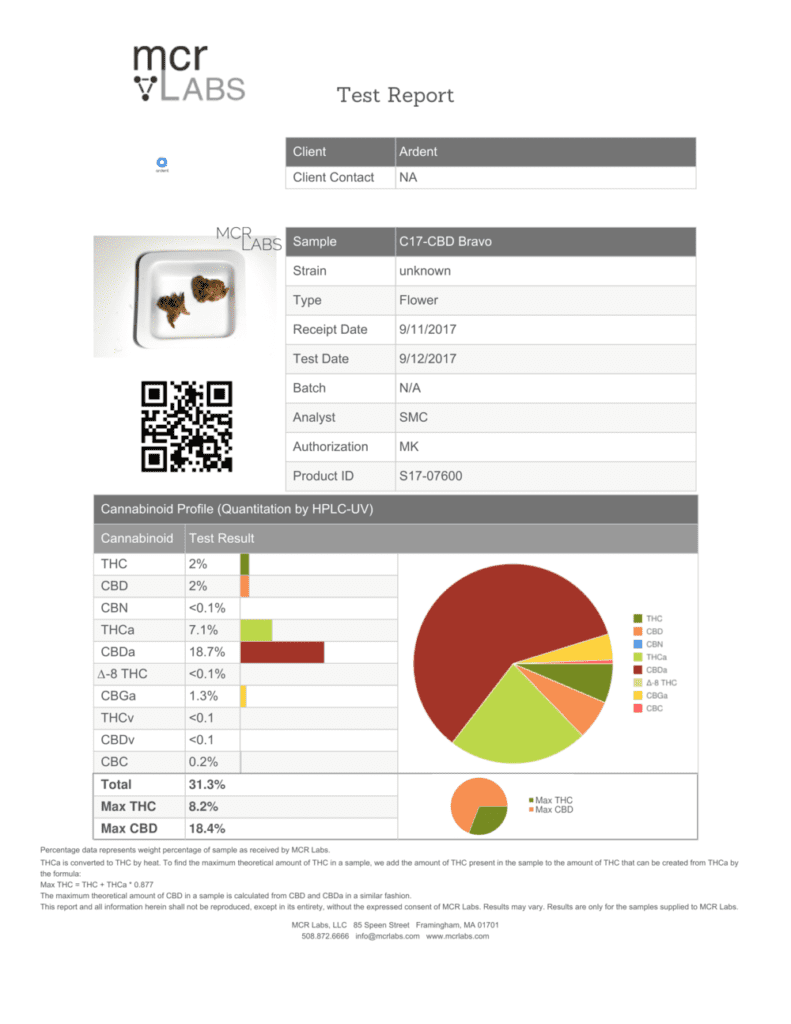
As you know, we have been working hard on our presale units. While we have been producing the next batch of units, we have also been busy testing and building additional data sets related to some of the most frequently asked questions. Top on the list is the operation of CBD during decarboxylation. While its commonly believed that CBDa requires a higher or longer temperature than THCa for optimal conversion, the situation is much more nuanced. CBDa can be quite volatile, and as we have shown you before, high temps can quickly degrade potential CBD. It is in fact possible to decarb CBD with the same parameters as THC. The determining factor in CBDa decarb is actually whether THCa is also present. Where THCa is present, even where CBDa is dominant, CBDa and THCa will decarb simultaneously and at the precision temps that work for conversion to THC. It is only where THCa is minimal or not present that CBDa may require longer (2 cycle) processing.
We will be releasing a full battery of testing and discussion related to this topic to the public, but wanted to provide you a first exclusive look. You can see in the results below a high CBD strain decarbed in 1 cycle in the unit. Notice that the starting sample (C17-CBD Bravo) shows the raw plant material, dried and cured. You can see in the second results (D17-1 CBD Bravo), there was full decarboxylation of the CBD and THC while retaining all of the potential CBD (19%) and THC (8%).
CBD before being decarbedDecarbed CBD
We have also begun working on the formulations for our capsules, sublinguals, and topicals and will invite you to have first access to those. There are so many exciting things in store over these next few months, we’re glad you’re a part of it and please stay tuned!
Most Americans are familiar with the dosing procedures of OTC drugs like Tylenol or Aspirin. This familiarity allows them to self-medicate without speaking to a pharmacist. Few marijuana patients enjoy this security, though many of them may desperately need it.
Dosing is the most important aspect of any medical cannabis program. Whether your intention is to combat a rising tolerance, maintain precise blood levels through micro-dosing, or control a changing pain level throughout the day. Dosing is the variable that holds the key to success.
Accurate dosing is also one of the aspects of cannabis consumption that is the least understood.
As lab-quality cannabis products replace the dubious products of the cannabis fringe markets, the goal of reliable dosing has left the realms of eventual possibility and become something that even a casually educated home consumer can master.
This three step guide will tell you all you need to know to start getting the dose or serving size that you’re looking for, every time.*
PLEASE NOTE: This guide discusses the dosing of activated THC after the flower has been decarboxylated, not raw cannabis flower. In the raw plant, the THC is in its acid form, THCA. It must be properly decarbed to activate and utilize the THC.
TABLE OF CONTENTS
How to Measure THC Content
1. Use a Lab for Measuring THC Levels
The most accurate way to know the exact chemical compounds present in your plant material is to get it tested at a lab via via High Performance Liquid Chromatography (HPLC). This time-intensive process can be done on as little as 0.1g of material, but many labs will require more to be able to get a truly accurate reading. This is the testing procedure used by many cannabis producers, extractors, and manufacturers who must verify the content of their products before they are made available for sale in medical and recreational cannabis legal states.
High-Performance Liquid Chromatography (HPLC) is a method of compound analysis that can identify and quantify the individual elements found within a sample. It is currently the gold standard in all fields which make use of analytical chemistry, including the cannabis industry.
Long term patients may be aware that HPLC replaced Gas Chromatography and Mass Spectrometry as the industry standard in cannabis lab testing. HPLC can identify both volatile and nonvolatile compounds present in a sample.
Among other things, this makes it a more accurate testing method, which is particularly important in an industry where unknown pesticides are regularly discovered. This is the sort of testing procedure available at your local lab. We highly encourage patients to seek out their local labs and get their material tested, particularly if they regularly consume the same strains from the same brands. This will help you determine how consistent their products are.
As always, never buy a cannabis product that does not come with an associated lab test. Most states require cannabis brands to include the lab test for the product right on the packaging. So be sure to look for that at the time of purchase. Ensure the cannabinoid content is consistent with the sale price and packaging. Also, look for purity and potency testing to ensure your product does not include any pesticides or unwanted ingredients.
2. Make an Educated Guess at Your Kief, Extract or Hash Dosage
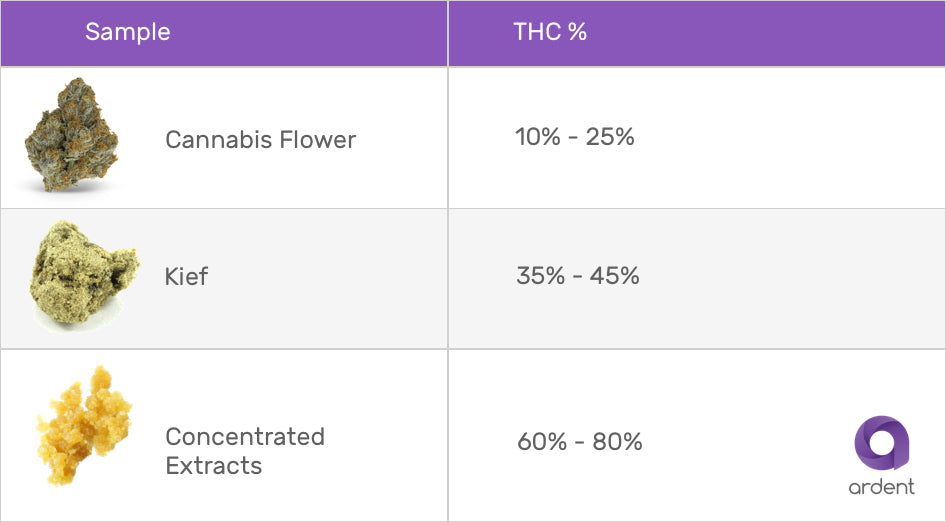
As we mentioned in #1 above, if you get your cannabis from a dispensary, it will have lab testing results on the label indicating the potency of the flowe, keif or concentrate. Once you have this number, you can skip below to #3 and calculate your dose. But what if you don’t have cannabis that comes with a lab test? You can still get a good range of how much THC is present by using this data: most cannabis flower has a THC level between 10-20%, with the average strain grown under good conditions coming in around 15-17%.
Kief and the related variations of hash tend to have a much greater THC percentage, coming in between 35-55%. Kief itself tends to be on the low end of this spectrum, while refined products like Bubble Hash tend to test towards the top.
Concentrated extracts like shatter, budder, and rosin tend to have even higher THC concentrations between 60-80%, sometimes more. Note that blonder concentrates tend to be stronger than darker concentrates, and more translucent products like sap and rosin are often stronger than more opaque products like budder and wax.
3. How To Calculate Your THC Dosage In Milligrams (Mg)
Once you know your THC %, we can do some simple math to calculate the milligrams (mg) of THC per gram.
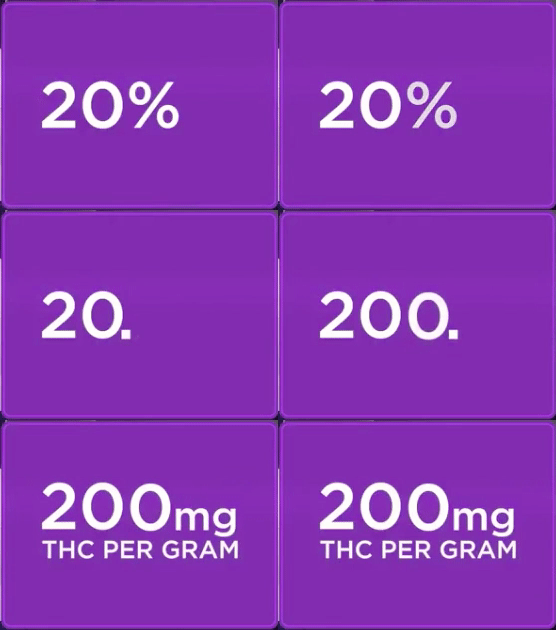
Simply move the decimal in the THC percentage one place to the right. The resulting number reflects the milligrams of THC present in one gram of your material.
For Example:
If your cannabis has a 20% THC count: 20% = 20.0
Move the decimal one place to the right: 20.0 = 200
So in this example, it would be 200 mg THC per gram
What Does This Mean for you?
Many patients who medicate throughout the day do so with a THC dosage of around 20 mg per dose. That said, it will depend on the patient and their tolerance as not all people will be able to start there. The best rule of thumb for medicating with cannabis edibles is to start low and go slow. If you’ve never tried an edible before, 5mg or below is probably a good place to start and work your way up from there. The 20mg dose previously mentioned would normally require a fairly high volume of cannabis if you are using imprecise decarboxylation or you are consuming your cannabis in inefficient ways.
For example, it is estimated that upwards of 70% of available THC is lost in the process of smoking cannabis in joint form.
With fully decarboxylated weed, a 20mg dose can be achieved with one-tenth of a gram of cannabis (assuming the starting material has a THC concentration of 20%). This is a very small amount of material that is easily managed.
This reduction in costs is life-changing for patients who have previously needed to use large amounts to get the same results. With small, effective doses it becomes easy to add cannabis into fun treats and regular meals, without ever having to worry about the overwhelming taste of marijuana.
Weighing to Get Your Decarbed Weed Dosage Right
Once you know the THC content of your material, proper dosing is as simple as weighing out the amount of plant material that contains the amount of THC you desire. Long term cannabis patients who are new to the process of total decarboxylation and using decarbed herb will be stunned to realize how little plant material they can consume with this new potency.
In many states where legal medical cannabis is sold, 100mg THC is the maximum dose size. This amount can be spread across several cookies or candies and therefore can be taken individually based on the consumer and their tolerance.
For Example:
It is very common for professionally grown cannabis to reach THC levels of 20%
Flower with 20% THC levels has a THC concentrationof 200mg per gram
This means that a patient who fully decarboxylatesthis material can achieve a standard medical dose using only 0.5g of plant material
Think about that. This means that a mere 1/2 gram of decarbed bud can produce about 200mg of THC for edibles. How much is a .5 gram of weed where you live? Most dispensaries, depending on the state and whether or not it is medical or recreational will charge between $10-$25 per gram. This means roughly $10-$25 for a single gram could turn into about 200mg per gram worth of edibles! How much would 200mg of edibles cost where you live? Most states range between $15-$40 for 100mg worth of edibles!
As always, the key to efficient dosing is total decarboxylation of whatever plant material you’ve chosen. For more details on decarboxylation and the role it plays in efficient THC usage, see our blog or contact us directly if you have questions.
Although a novel dosing concept, direct sublingual marijuana application is firmly rooted in science and parallels the most effective traditional uses of medical cannabis.
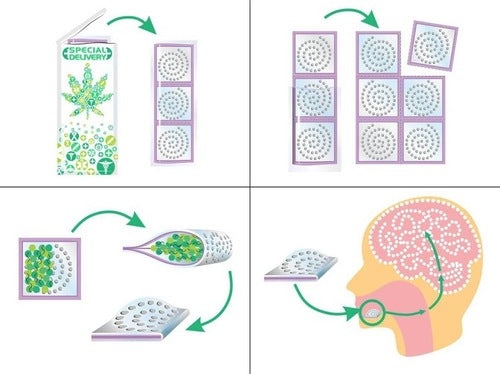
Direct sublingual application involves placing precisely decarboxylated cannabis under the tongue, allowing the cannabinoids to immediately enter the bloodstream through the vessel-rich tissues within the sublingual cavity. Fast, accurate uptake without the hazards of smoking!
Hi Ardent Family!
We hope you have something fun or relaxing planned for the holiday. After our last message, we heard from a lot of you wanting to know more about the second aspect of the testing results we hinted at during our last message. Well, you know how much we love science, so lets get right to it!
We randomly test decarboxylators that are out in the field, just to make sure that we are always delivering consistent quality to our patients. This discussion uses the results from two units tested earlier this month.
THC Conversion
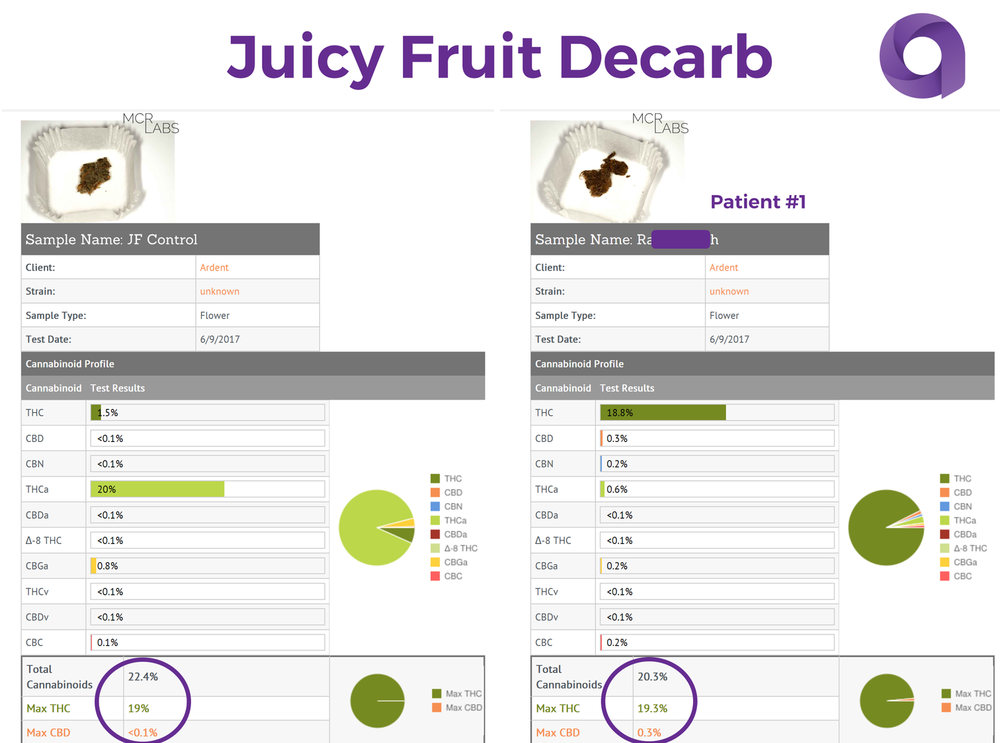
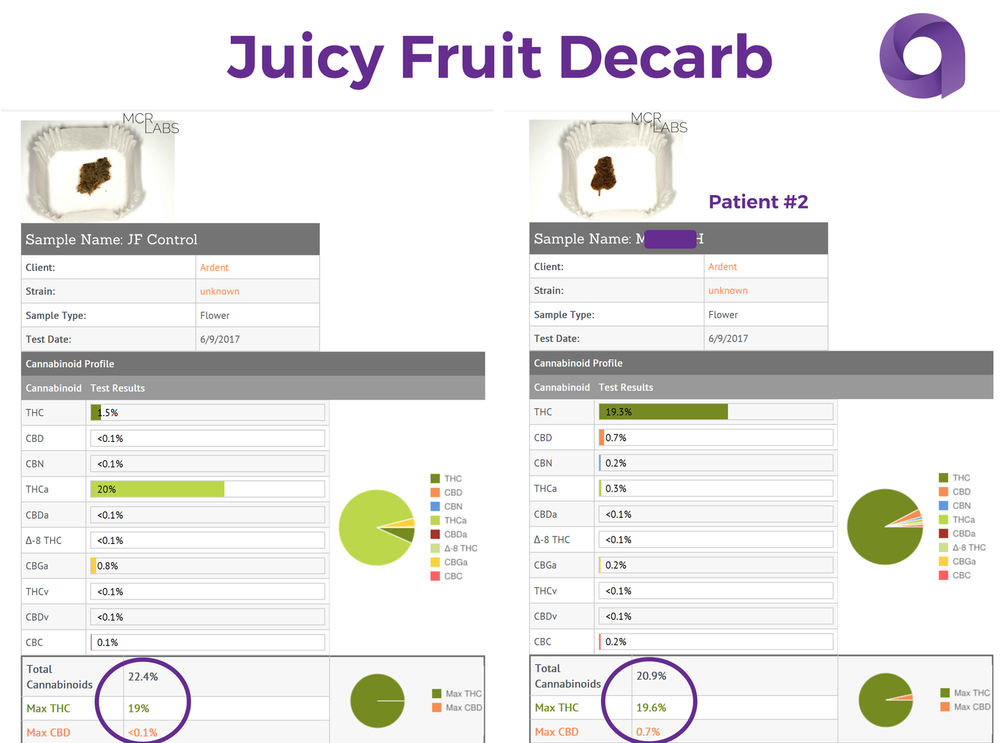
Patient #1 – A sativa strain named Juicy Fruit was our starting material, but kief, trim, or concentrates would have worked, too. The control testing of non-decarbed flower is on the left, marked JF Control. Remember it is critical to have the starting material test to compare with the decarbed results. It is the only way to show you aren’t burning off any cannabinoids in the process. While its somewhat easy to convert THCA to THC, it is very difficult to do so without destroying a lot of THCA in the process.
In the control test to the left, there is a maximum potential THC level of 19%.* On the right side is the decarbed sample (we redacted the patients’ names for privacy). With a precision decarb, we get full conversion of the maximum amount of THC possible, retaining the entire 19%. If you were dosing this, you could create a 190mg product using just 1 gram!
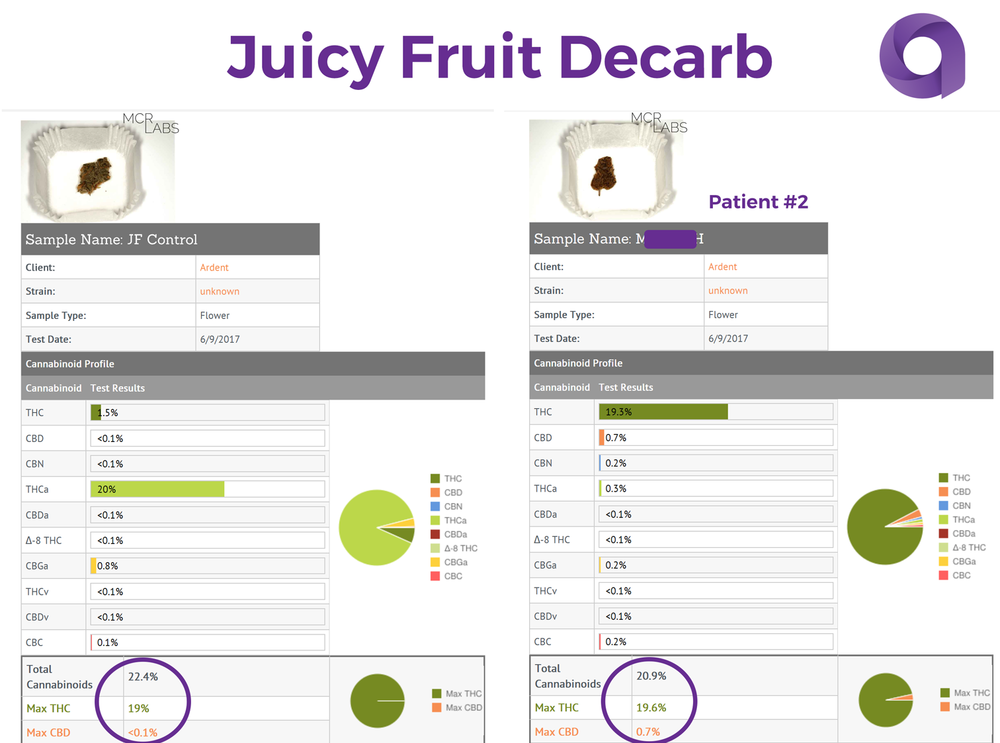
Patient #2 – Here you can see the same results with the second unit, full conversion without any loss of THC during the process. In addition to the THCA conversion, you might have noticed something else interesting happening during these tests. And it involves the chameleon-like CBGa.
CBG Conversion
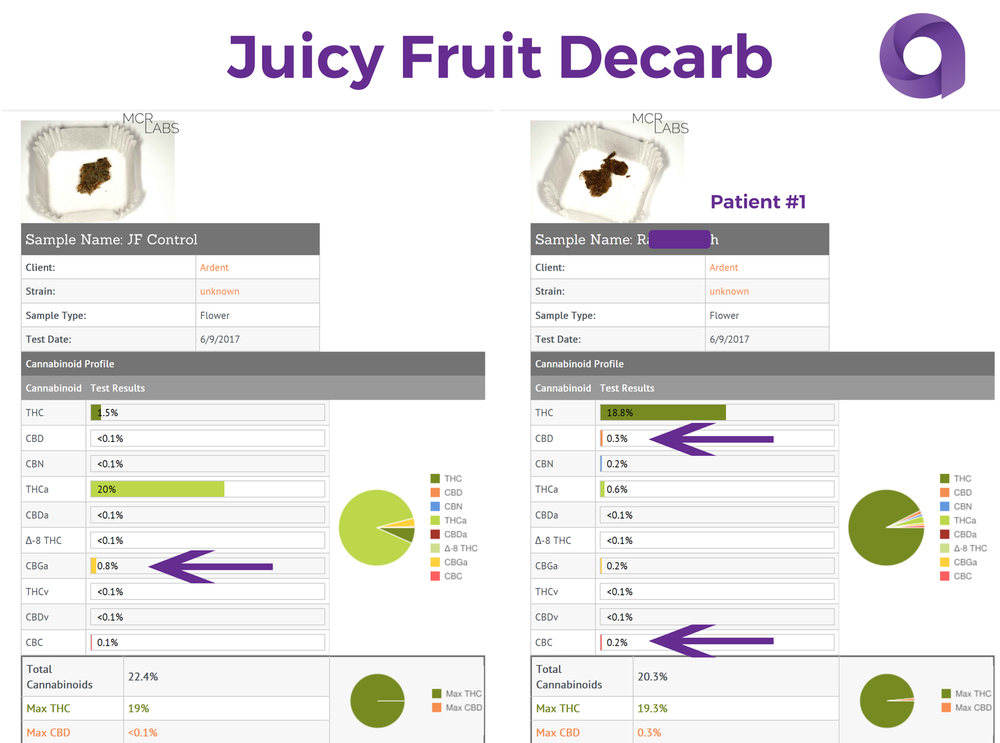
There is a lot of interest in CBGa and for good reason. It reminds me of a stem cell, has it has the ability to convert into several different cannabinoids. CBGa is the building block for THC, CBD and CBC. In our starting control sample of Juicy Fruit, there is some CBCa, ready and waiting to become something amazing. Let’s see how it turned out:
Patient #1 – CBGa in the control converts to CBD and CBC
Patient #2 – CBGa in the control converts to CBD and CBC
We think its fun and educational to explore the different aspects of cannabis science. Let us know what you would like us to discuss next!
*to find the maximum available THC, multiply the THCA by .877 then add that number to any THC already present. Here for example, the maximum THC that can be derived from the starting material is 20% THCA x .877 = 17.5% + 1.5% THC = 19%. Where does the .877 number come from? The carboxyl group that we want to remove during decarb weighs 13% of the total molecule. So during proper decarb, when we are removing that molecule only, it will reduce the weight by slightly less than 13%; the 87% remaining weight is the converted THC.
Although a novel dosing concept, direct sublingual (THC oil under tongue) application is firmly rooted in science and parallels the most effective traditional uses of medical cannabis.
Direct sublingual application involves placing precisely decarboxylated cannabis under the tongue, allowing the cannabinoids to immediately enter the bloodstream through the vessel-rich tissues within the sublingual cavity. Fast, accurate uptake without the hazards of smoking!
What is a chronic condition?
Any health issue that causes distress, pain or suffering for more than three months. In states where medical cannabis is legal, the state will list qualifying (often chronic) conditions.
These “qualifiers” are diseases for which medical marijuana is approved for use as medicine, in that state where the patient lives. Most states include a “gray area” which allows doctors to assess the patient’s condition(s), then determine if medical cannabis is appropriate.
Ardent Cannabis encourages all people who suffer and especially those who have tried and failed many conventional therapies, to have the discussion with your doctor about cannabis. If your doctor is not open to cannabis, find another doctor.
You’ve probably read how “decarbing” first is the most important step in preparing cannabis for consumption. The process makes sense, but getting an accurate temperature with the oven is close to impossible. For maximum potency you need maximum efficiency and sadly toasting your bud in the oven is highly inefficient.
TABLE OF CONTENTS
Here’s why you might want a more accurate method…
The solutions that currently exist for patients wishing to decarb all fall short of full THC activation. Not only are they complicated and labor intensive, they make accuracy all but impossible. The result is fluctuations in strength and potency of medicine that can have detrimental effects on patients. Before discussing how patients can decarb right, it is important to understand why and how the other methods fail.
What’s wrong with the oven method?
Preparing cannabis for medicinal purposes is a scientific process that should never be trusted to an oven. The process performed this way can never be precise.
Oven thermostats fluctuate an average of 10 degrees in both directions, which is detrimental to the decarb process. Opening and closing the oven further alters the temperature, leaving patients who use this method constantly guessing.
Here’s a good example of the oven method. It demonstrates how impossible it is to get a reliable result this with this method. It’s inconvenient. You can’t leave the kitchen, you have to constantly monitor, and it makes the whole house smell. You can hear the chef admit that an oven varies 10 degrees in either direction and that you can expect decarboxylation to leave your bud toasted (no, no, and NO!).
Using a huge inaccurate oven requires you to constantly check, makes the entire house stink, and leaves you with crunchy brown bud .
What is the oven doing to the bud scientifically?
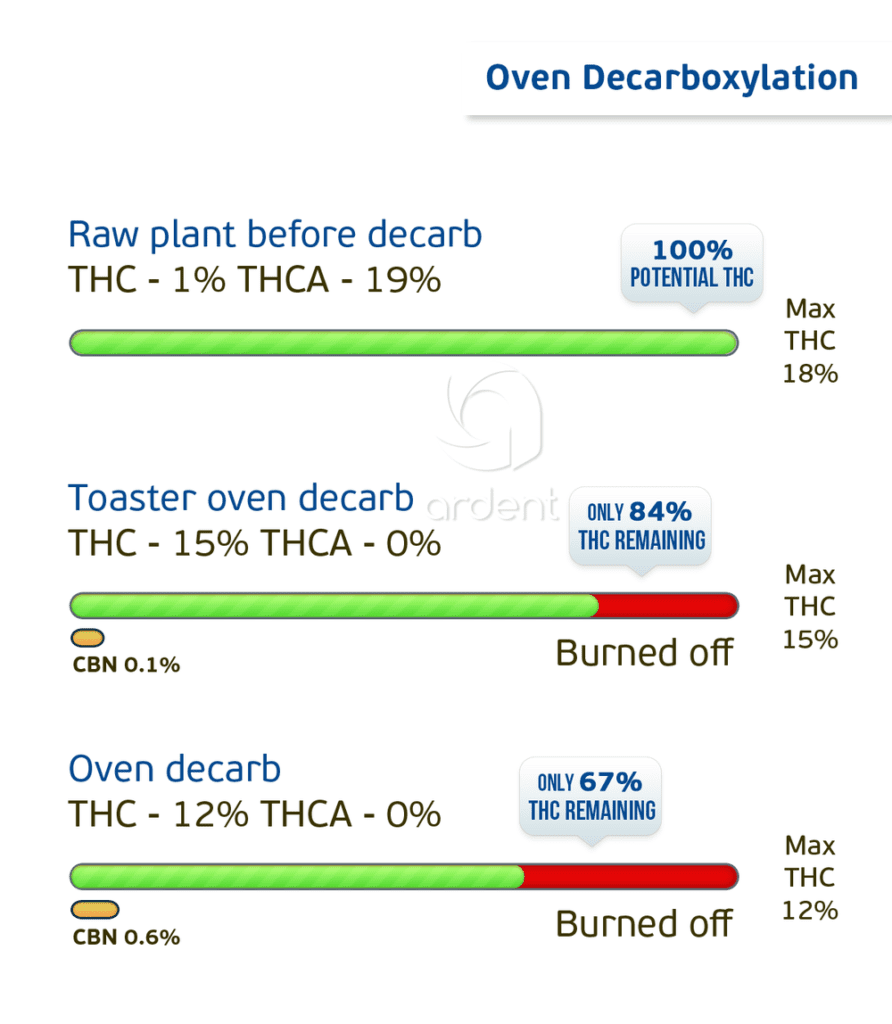
Take a look at the test results below, comparing a raw sample with the same plant decarboxylated using a toaster oven and conventional oven.
The imprecision of the oven method can lead to under-decarbing, resulting in waste, leaving much of the THC is still in its acid form.
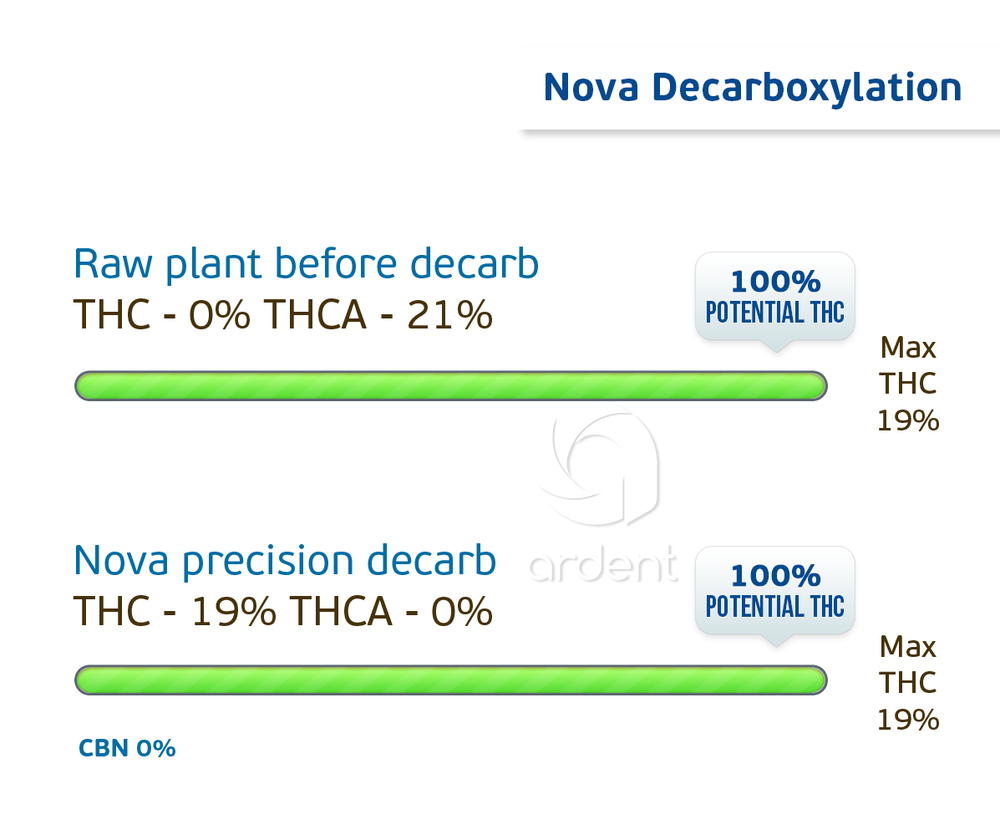
It’s always critical to see before and after testing when it comes to decarboxylation. A test result could appear to show a fully decarbed product, but if you compare that same sample pre-decarb, it will reveal that many of the cannabinoids have been burned off.
How can I get an accurate decarb?
The pitfalls and uncertainty of these methods lead Ardent to develop the NOVA™, a precision temperature, lab-grade decarboxylator that allows patients to decarb. It is the only accurate, hassle free way to decarb, and ensure 100% activation.